The New Luxury Question: Will This Property Still Be Valuable in 10 Years?
Luxury real estate has always been about location, design, and prestige. But today, high-net-worth buyers are asking a new question: Is this property future-proof?
In a world shaped by climate change, rising energy costs, stricter environmental regulations, and evolving buyer expectations, sustainable architecture is no longer a “nice-to-have.” It has become a core driver of high resale value.
Investors and developers who ignore ESG (Environmental, Social, and Governance) principles risk building properties that depreciate faster than expected. Meanwhile, homes designed with sustainability in mind are commanding premium prices, attracting global buyers, and outperforming conventional assets.
What ESG Means in Luxury Real Estate
ESG stands for Environmental, Social, and Governance — a framework used to evaluate sustainability and ethical impact in investments.
In property development, ESG translates into:
Environmental
Energy efficiency, Renewable energy integration, Water conservation, Low-carbon materials, Waste reduction
Social
Healthy indoor environments, Community integration, Accessibility, Wellness-focused design
Governance
Transparent development practices, Ethical sourcing, Regulatory compliance
Global frameworks like the United Nations Sustainable Development Goals have accelerated investor demand for ESG-aligned assets. Institutional capital now actively favors properties that demonstrate measurable environmental performance.
Why Sustainability Directly Impacts Resale Value
Luxury buyers are no longer driven by aesthetics alone. They evaluate Long-term operational costs, Energy resilience, Climate exposure, Regulatory risk, and Market desirability.
Here’s how sustainable architecture increases resale value:
1. Lower Operating Costs = Higher Buyer Appeal
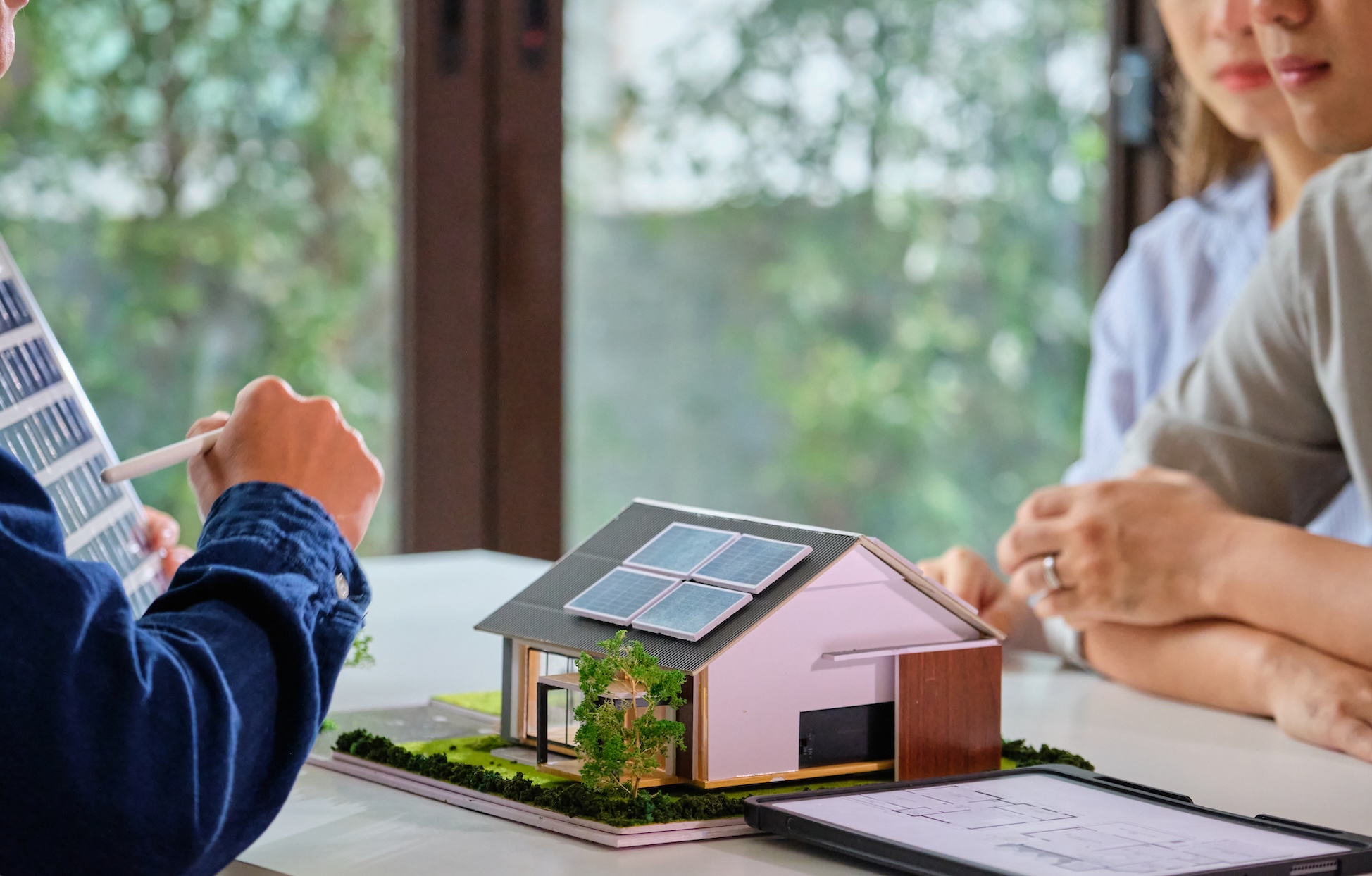
Energy-efficient homes reduce electricity bills significantly. Properties equipped with solar panels, high-performance insulation, smart energy management systems, and passive cooling design are more attractive in markets with rising energy prices.
Buyers understand that operational savings increase net yield — especially for investment properties and luxury villas in tropical climates.
2. Protection Against Future Regulations
Governments worldwide are tightening environmental standards. In many cities, energy performance certificates are becoming mandatory for resale. Green-certified properties are already compliant — reducing future upgrade costs and protecting liquidity.
Properties without ESG features may soon face higher taxes, mandatory retrofits, and lower buyer demand.
3. Stronger Market Differentiation
In competitive luxury markets, sustainability is a key differentiator. High-net-worth individuals increasingly seek carbon-neutral homes, net-zero villas, smart water systems, and climate-adaptive architecture.
Luxury developments that integrate ESG principles stand out in marketing and command premium pricing.
Green Building Certifications That Boost Property Value
Certifications provide third-party validation of sustainability performance.
LEED Certification
Developed by the U.S. Green Building Council, LEED (Leadership in Energy and Environmental Design) is one of the most recognized global green building certifications. LEED-certified properties often sell faster, achieve higher occupancy rates, and command rental premiums.
WELL Building Standard
Managed by the International WELL Building Institute, WELL focuses on human health and wellness within built environments. Luxury buyers increasingly value indoor air quality, natural light optimization, acoustic comfort, and biophilic design. Health-centric architecture enhances desirability — especially post-pandemic.
BREEAM
Originating in the UK through the Building Research Establishment, BREEAM evaluates sustainability performance across energy, materials, waste, and ecology.
The Integration of Resilience and Efficiency in Modern Luxury
In the current real estate landscape, climate risk has evolved into a measurable financial risk. Luxury buyers are now meticulously evaluating factors such as flood zones, storm resistance, and heat mitigation before committing to a purchase. Sustainable architecture addresses these concerns by integrating resilience directly into the structure—using elevated foundations, permeable landscaping, and hurricane-rated glazing to ensure that properties maintain their value even during periods of environmental volatility.
Complementing this resilience is energy performance, which remains one of the most significant drivers of property appreciation. Modern high-end homes are increasingly incorporating net-zero energy systems, geothermal cooling, and smart home automation to optimize efficiency. These green-certified features are not just environmentally conscious choices; they are strategic investments that, according to global market studies, can command a 5–15% price premium in key luxury markets.
Materials, Wellness, and Long-term Investment Strategy
The definition of luxury has also shifted toward the use of sustainable materials that offer a distinctive architectural identity without an environmental cost. By utilizing FSC-certified timber, recycled stone, and low-VOC paints, developers can create high-end spaces that appeal to eco-conscious buyers. This commitment to sustainability extends to water management—particularly in tropical destinations—where features like greywater recycling and smart irrigation have become essential for future-proofing assets against water scarcity.
Beyond the physical structure, wellness architecture has emerged as a powerful emotional driver for luxury demand. Features such as biophilic design, natural ventilation, and non-toxic materials enhance both the quality of life for residents and the financial returns for owners, often resulting in higher rental yields. Ultimately, integrating these ESG principles is no longer optional; it is a sophisticated investment strategy that ensures long-term asset protection, regulatory alignment, and the avoidance of "stranded assets" that become difficult to sell or refinance in an increasingly green economy.
Actionable Tips for Developers & Investors
If you want high resale value in luxury real estate, here’s what to prioritize:
1. Design for Net-Zero from Day One - Retrofitting is expensive. Build sustainability into the blueprint stage.
2. Secure Recognized Certifications - LEED or WELL certification adds measurable credibility.
3. Invest in Smart Technology - Energy monitoring dashboards appeal to modern buyers.
4. Highlight ESG in Marketing - Use sustainability metrics in listings: Energy savings, Carbon reduction, Water conservation data
5. Conduct Climate Risk Assessments - Demonstrate resilience planning to buyers.
The Future of Luxury Is Sustainable
Luxury is no longer defined by excess.
It is defined by intelligence.
It is defined by resilience.
It is defined by responsibility.
Properties built with ESG principles are not just environmentally conscious — they are financially strategic.
Sustainable architecture protects against regulatory shifts, climate volatility, rising operational costs, and evolving buyer expectations. It enhances market differentiation, strengthens brand reputation, and delivers measurable resale premiums.
If it isn’t sustainable, it won’t stay valuable.
High resale value in luxury real estate now depends on ESG integration, energy efficiency, climate resilience, wellness-focused design, and recognized certifications
Whether you are developing a luxury villa, investing in high-end residential property, or repositioning an asset for resale, sustainability is your strongest value protection strategy.
The future buyer is informed, climate-aware, and financially strategic.
Contact Us
For sales and villa information: Email: sales@pavaragroup.com
For legal-related enquiries, such as villa ownership, due diligence report:
Mr. Ittinant Suwanjutha, Partner, IAS Advisory Co.,Ltd.
Email: ittinant@ias-law.com Mobile: 0612387447